
Research profile
I am a computational scientist and applied physicist working at the intersection of physical theory, data science, and numerical modeling, with an active research focus on ocean and Earth-system dynamics.
My background pairs a rigorous formal education, including a PhD in Engineering Science from Tyndall National Institute and postdoctoral experience at Dartmouth College, with years of self-directed learning fueled by relentless scientific curiosity. Working across academic, national laboratory, and applied research environments, my research examines mechanistic descriptions of non-linear dynamics in interacting physical systems. This involves developing predictive models with multiphysics, multiscale, and hierarchical modeling frameworks with FEM, arbitrary Lagrangian-Eulerian (ALE) formulations, and stratified-media wave methods. Select applications include fluid dynamics, field-coupled interactions, wave propagation and attenuation, mass transport, convection-diffusion, energy dissipation, and psysicochemical processes. Across these applications, a common goal is understanding complex processes and translating physical insight into efficient and accurate predictive models. This work has led to theoretical and computational studies published in Nature Communications, the Springer Nature journal Microsystems & Nanoengineering, Materials & Design, and IEEE journals, as well as two granted patents. The impact of this research has been recognized through collaborative awards, including an SFI Future Innovator Prize Phase 1 Award and first prize in EARTO’s Impact Expected category.
Building on this foundation, I am developing an active research focus in oceanographic modeling, where understanding physical processes is essential for predicting environmental variability and change, anticipating impacts and extremes, and informing decision making. I am motivated by research challenges that reward deep physical insight and effective collaboration to produce impactful, societally relevant science.
“To see a World in a grain of sand
William Blake
And a Heaven in a wild flower
Hold Infinity in the palm of your hand
And Eternity in an hour”
Physical oceanography & Earth system science
I am extending my long-standing background in mechanistic modeling of nonlinear systems to physical oceanography, where central research themes include geophysical fluid dynamics, ocean circulation, mixed-layer dynamics, air-sea and wave interactions, upwelling, coastal dynamics, sea level variability, Lagrangian transport, and biogeochemical coupling. Ocean systems bring together many of the questions that have consistently motivated my work.
My current line of investigation involves in-depth engagement with physical oceanography literature, synthesis of open-source data structures, and integration with oceanographic modeling resources. I am interested in integrating emerging AI capabilities into leading-edge oceanographic research workflows, including machine learning, agentic, and tool-augmented AI. My experience includes AI-enhanced parameter space exploration and Pareto front generation, utilizing the scikit-learn machine learning library in Python for principal component analysis, k-nearest neighbors, and clustering, and investigating machine-learning approaches for extending decoherence times in open quantum systems.
Frontiers in ocean modeling
A curated selection of leading-edge oceanographic research from the wider scientific community, and technical connection with my numerical modeling background and research interests.
From computational physics to ocean modeling
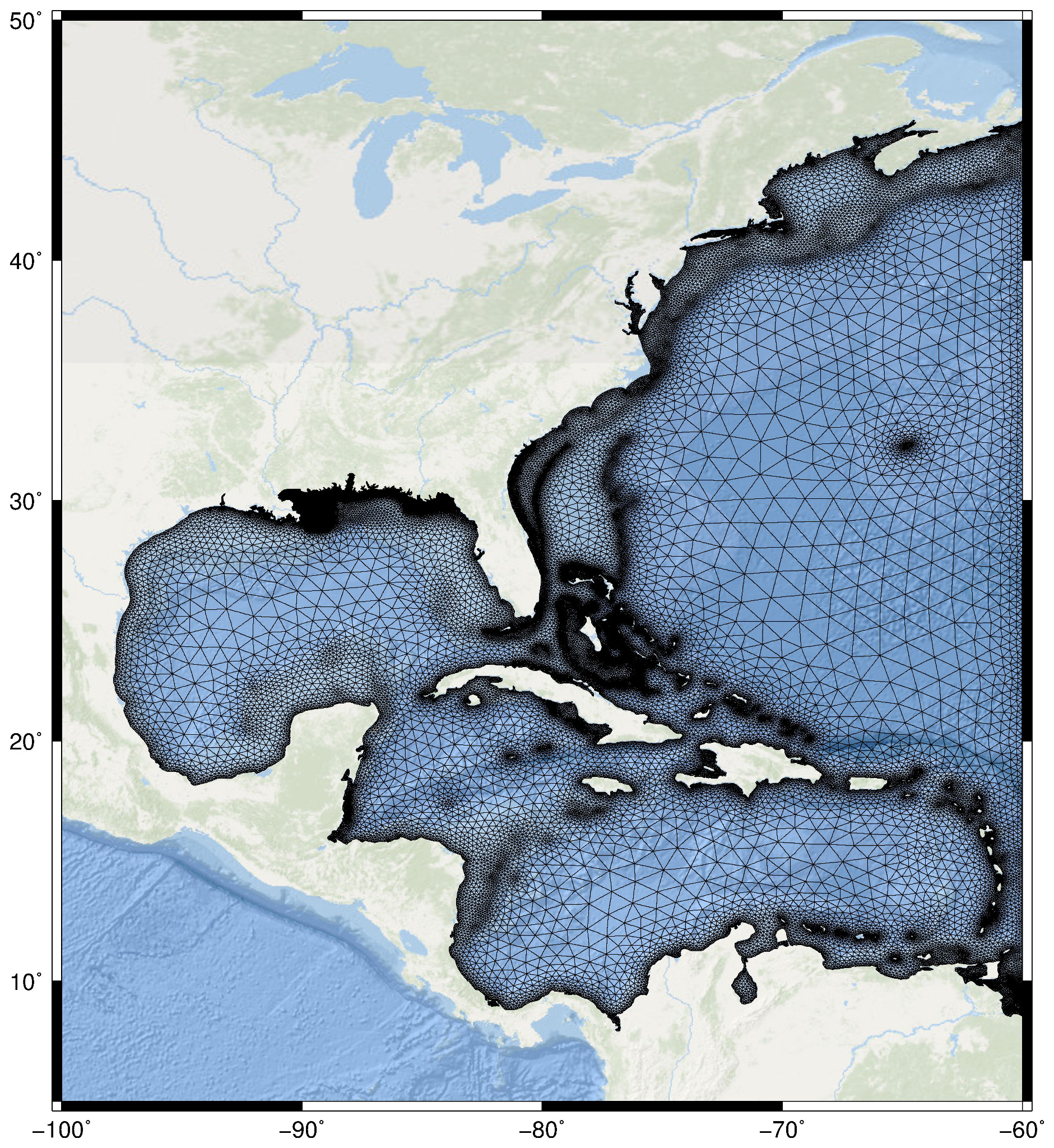
My experience across theoretical research, numerical simulation, and applied computational science has built a strong foundation that extends beyond any one model or application. At the core is turning physical questions into tractable numerical problems by capturing the governing physics, choosing appropriate representations, discretizations and numerical methods, interrogating assumptions and parameterizations, and evaluating predictions against data. These same elements underpin contemporary oceanographic modeling, including what can be resolved and what must be approximated, exploring sensitivity and uncertainty, integrating observations and reanalyses, assimilating data, and validating model behavior. This is achieved through implementation of multiphysics, multiscale, and hierarchical modeling frameworks and PDE-based continuum methods (e.g., FEM and FVM), with adaptive and unstructured meshes, and complex boundary conditions to address problems ranging from circulation, turbulence and waves to coastal dynamics, air-sea interaction and biogeochemical coupling. Increasingly, HPC, ML, and emerging AI approaches are extending these workflows through model analysis and inference, parameterization, and state estimation, building naturally on my experience in scientific computing, parameter space exploration, and data analysis and prediction.
The specific models and software may change, but the underlying discipline remains the same: formulate the physics, choose a numerical representation, determine what can be resolved and parameterize what cannot, test sensitivity, confront models with data, and discover what can be predicted. This is the foundation I bring to oceanographic modeling.
Transferable modeling foundations
Selected results highlighting transferable multiphysics, multiscale, and hierarchical modeling frameworks with methods in coupled transport, wave physics, evolving geometries, and model validation.
Models in motion
Wave dynamics & field simulations
Six short simulation loops from my unpublished work at Dartmouth, utilizing microwave cavity designs as reported by Salcedo-Gallo et al. (2025) in Nature Communications, together with N52 NdFeB hard-magnet models. 01 Sweeping frequency in a microwave cavity as photons are injected via a left coaxial cable. A conductive post in the bottom center functions as a monopole antenna (λ/4), creating a resonant frequency of 6 GHz. AC spikes at resonance while the magnetic field rapidly intensifies and reverses direction. 02 Scalar representation of 01. 03 Electric field intensity corresponding to 01 and 02, except four yttrium iron garnet (YIG) spheres have been introduced with regular angular spacing around the post. YIG spheres are soft magnets that alter cavity resonance behavior while dissipating minimal energy in the GHz range (e.g., the S, C, and X bands). 04 Sweeping length of an interconnecting coaxial cable in a microwave dimer system. Standing waves intensify proportional to cable length, where electromagnetic dissipation can be reduced by implementing a short interconnection pathway. 05 Length sweep of an N52 NdFeB magnet with depiction of the FEM mesh and magnetic flux density. 06 Scalar representation of 05.
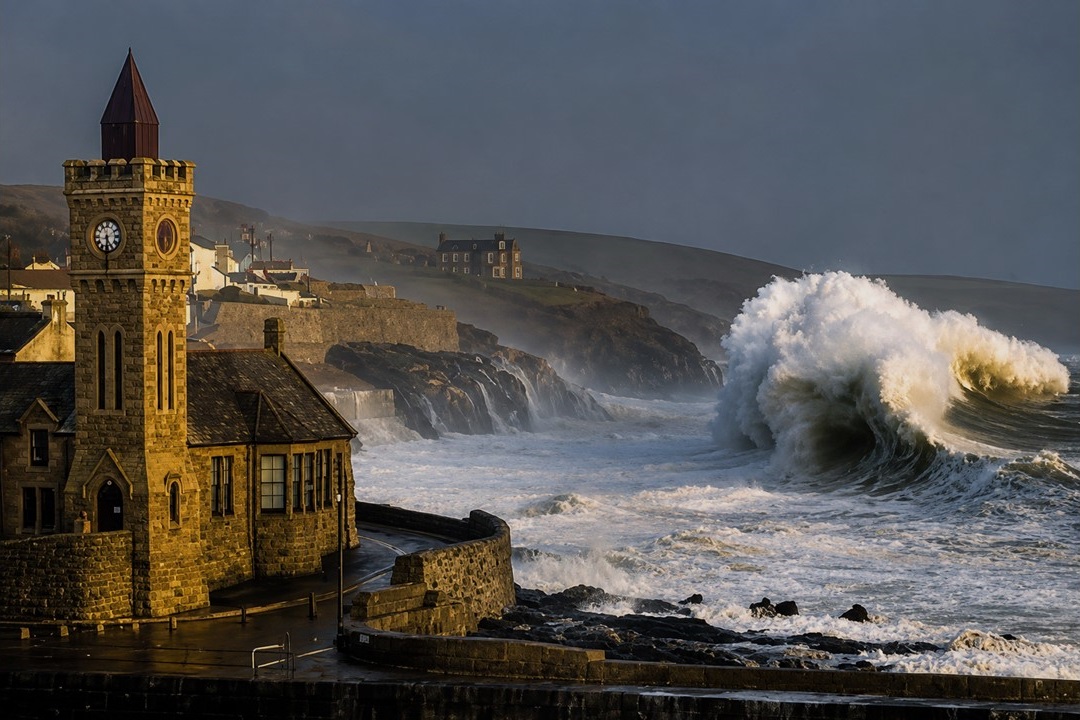
Computational power,
physical insight
Why predictive ocean modeling matters
The ocean is a remarkable physical system. It regulates global climate and weather, redistributes heat and carbon, shapes our coasts, influences hazards and extremes, and sustains marine ecosystems and food webs that are vital to life on Earth. Advancements in physical oceanography help us better understand how this system works and evolves, informing pivotal decisions regarding biodiversity, food security, livelihoods, climate resilience, coastal safety, and human well-being.
Ocean modeling turns observations and physical knowledge into predictive power. It allows us to investigate interacting processes across enormous ranges of space and time, test physical mechanisms that drive change, explore where data is sparse, and anticipate how ocean systems may respond in the future. Better models mean better forecasts, earlier warnings, and a stronger understanding of Earth-system dynamics.
To me, this is where computational physics finds a uniquely compelling application, integrating data, simulation, and physical insight to reveal the hidden foundations from which these complex and powerful natural phenomena seamlessly emerge, while at the same time, producing valuable knowledge that can directly benefit society today and in the future.
Publication record
Peer-reviewed journal articles
Conference presentations
Thesis / dissertation
Patents
Outreach & scientific imaging
Research conversations & collaboration
For research opportunities, collaborations, or other professional inquiries, use the form or connect through one of my profiles below.